Animals
Cities
Disasters
Entertainment
Food
Government
Health
Industry
Insects
Military
Nature
People
Sports
Technology
Universe
Vehicles
Explore over 500,000 Images in my personal collection
real images | real history | no AI
|
|
- Code Number:
- TARV02P07_05
- Title:
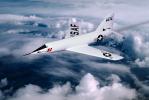
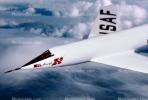
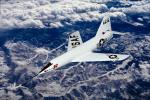
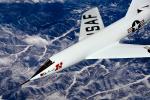
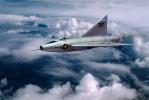
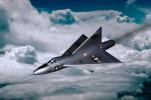
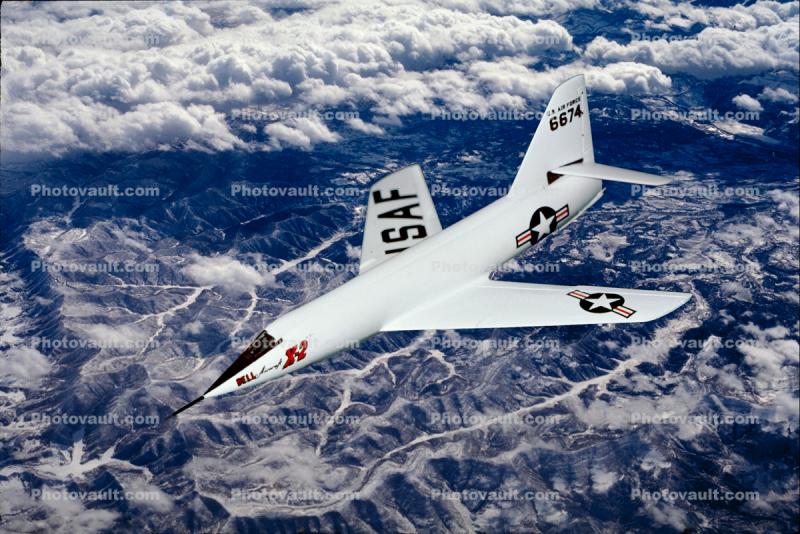
- Bell X-2 supersonic research aircraft
- This supersonic aircraft was designed to investigate the structural effects of supersonic aerodynamic heating as well as stability and control effectiveness at high speeds and altitudes. It was a rocket-powered, swept-wing research aircraft.
First flight: 18/11/1955 (first powered flight)
Retired: 27/11/1956
Primary users: United States Air Force
National Advisory Committee for Aeronautics (NACA)
Number built: 2
Crew: one pilot
Length: 11.5 meters (37 feet 10 inches)
Wingspan: 9.8 meters (32 feet 3 inches)
Height: 3.6 meters (11 feet 10 inches)
Wing area: 24.2 m (260 feet )
Airfoil: 2S-50 bicon
Empty weight: 5,600 kg (12,375 lb)
Loaded weight: 11,300 kg (24,910 lb)
Ma takeoff weight: 11,300 kg (24,910 lb)
Powerplant: 1 Curtiss-Wright XLR25 rocket engine, 67 kN (15,000 lbf) at sea level
maximum speed: Mach 3.196 (3,370 km/h, 2,094 mph) - supersonic
Service ceiling: 38,466 meters (126,200 feet) - Keywords:
- Image by:
- Wernher Krutein
- Caption Disclaimer
Royalty Free: Calculate Price