Animals
Cities
Disasters
Entertainment
Food
Government
Health
Industry
Insects
Military
Nature
People
Sports
Technology
Universe
Vehicles
Explore over 500,000 Images in my personal collection
real images | real history | no AI

|
|
- Code Number:
- TAGV06P01_01
- Title:
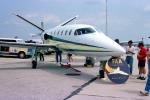
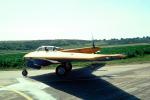
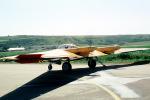
- LearAvia Lear Fan 2100, Pusher Prop, Learfan
- instead of the more common aluminium alloy this Lear Fan was constructed of lightweight composite materials. Due to complications this aircraft type never entered production.
Crew: Two (pilot and copilot)
Passengers: Six passengers
Length: 12.37 meters (40 ft 7 in)
Wingspan: 11.99 m (39 ft 4 in)
Height: 3.71 m (12 ft 2 in)
Empty weight: 1,860 kg (4,100 lb)
Max takeoff weight: 73,334 kg, (350 lb)
Engines: 2 P&W (Canada) PT6B-35F turboprops, 650 shp (480 kW) each
Maximum speed: 720 km/h (450 mph, 390 kn) at 7,600 m (25,000 feet)
Cruise speed: 518 km/h (322 mph, 280 kn) at 12,000 m (40,000 feet) economy cruise
Stall speed: 142 km/h (88 mph, 76 kn) with flaps down and power off
Range: 2,869 km (1,783 mi, 1,549 nmi)
Service ceiling: 12,000 m (41,000 ft) - Keywords:
- Caption Disclaimer
Royalty Free: Calculate Price